GSTIN No. 06BIYPK7350N1ZD



Proper Wrapping Techniques for Glassware Electronics and Antiques
- Home
- Blog & News
Proper Wrapping Techniques for Glassware Electronics and Antiques
Demonstrate Proper Wrapping Techniques for Glassware, Electronics, and Antiques
Moving fragile and valuable belongings requires more than simply placing them inside a box. Glassware, electronics, and antiques need specialized wrapping, careful handling, and secure packing to reduce the risk of scratches, cracks, dents, moisture damage, and breakage during transportation.
At Hari Om Packers & Movers, we understand that every valuable item deserves proper protection. Our professional packing team uses appropriate packing materials and proven wrapping techniques to help ensure your belongings reach their destination safely.
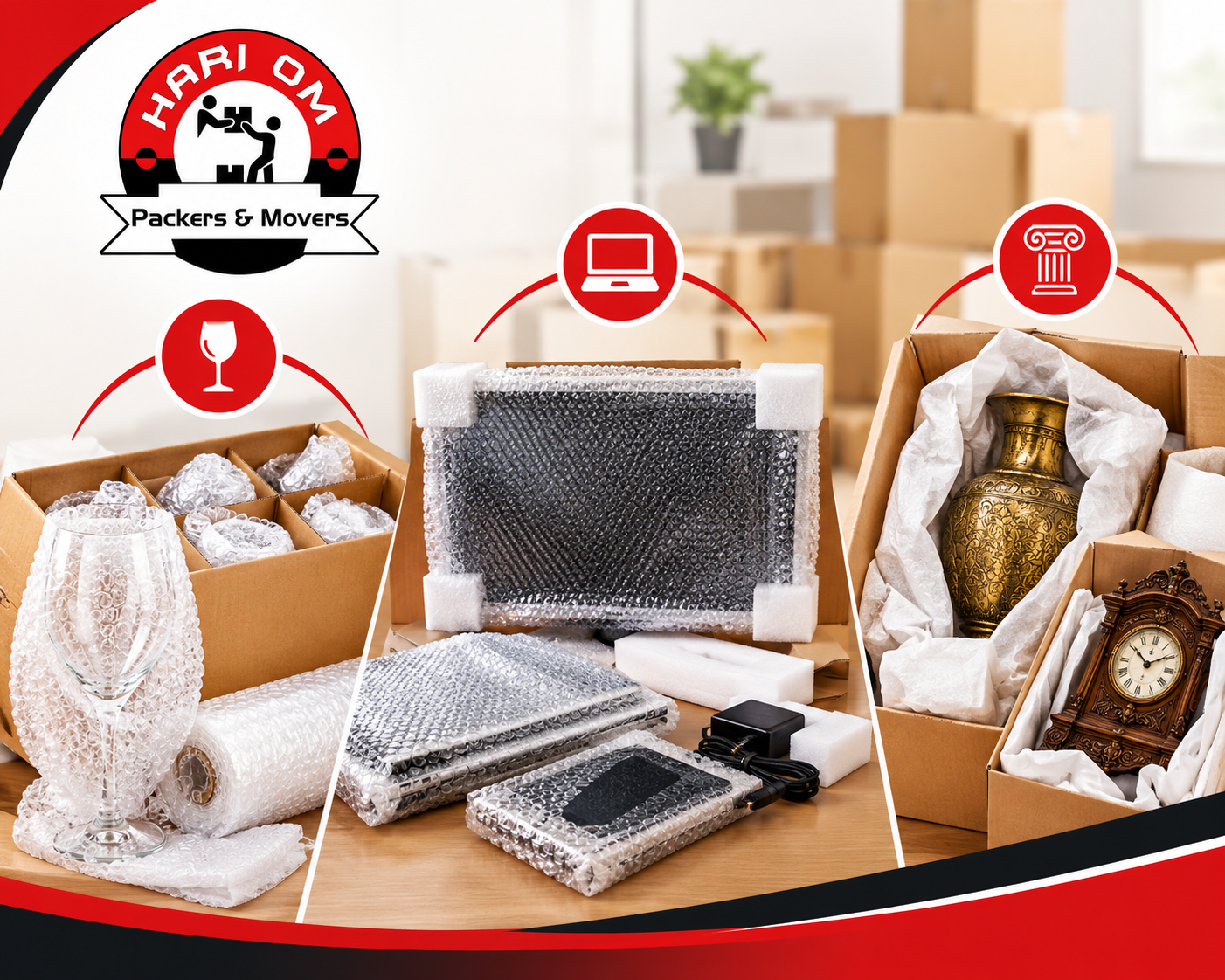
1. Proper Wrapping Techniques for Glassware
Glassware such as glasses, cups, bottles, vases, dinner sets, and decorative glass items can easily break when exposed to impact or vibration.
Recommended Glassware Packing Process
Step 1: Prepare the Packing Area
Use a clean, flat surface and keep sufficient bubble wrap, packing paper, cartons, and protective materials ready.
Step 2: Wrap Each Item Individually
Wrap every glass item separately with quality packing paper or bubble wrap. Pay special attention to thin edges, handles, corners, and delicate surfaces.
Step 3: Add Extra Protection
For particularly fragile glassware, add an additional layer of bubble wrap or foam sheet.
Step 4: Use Strong Boxes
Place wrapped glassware inside sturdy, appropriately sized moving cartons. Avoid leaving large empty spaces inside the box.
Step 5: Fill Empty Spaces
Use cushioning materials such as crumpled packing paper or protective foam to prevent the items from moving during transportation.
Step 6: Label Clearly
Mark the carton "FRAGILE – HANDLE WITH CARE" and indicate which side should remain upright where necessary.
2. Proper Wrapping Techniques for Electronics
Televisions, computers, monitors, printers, speakers, kitchen appliances, and other electronic equipment require protection against impact, vibration, dust, and moisture.
Recommended Electronics Packing Process
Step 1: Switch Off and Disconnect
Disconnect all cables and accessories. Allow electronic equipment to cool before packing.
Step 2: Remove Loose Components
Pack detachable cables, remotes, chargers, and accessories separately and label them properly.
Step 3: Protect the Surface
Use soft packing material to protect screens, panels, buttons, and polished surfaces from scratches.
Step 4: Use Bubble Wrap and Foam
Wrap electronics carefully with bubble wrap and add foam protection around corners and vulnerable areas.
Step 5: Use the Right-Sized Carton
Whenever possible, use the original manufacturer’s box. If unavailable, choose a strong carton that provides sufficient protection without excessive empty space.
Step 6: Secure the Equipment
Fill gaps with suitable cushioning material so the equipment does not move inside the carton.
Step 7: Label and Handle Carefully
Clearly mark boxes containing electronics as "FRAGILE" and "THIS SIDE UP" where appropriate.
3. Proper Wrapping Techniques for Antiques
Antiques often have sentimental, historical, or financial value. Wooden furniture, sculptures, artwork, clocks, collectibles, and decorative pieces may require specialized protection.
Recommended Antique Packing Process
Step 1: Inspect the Item
Check the antique carefully for existing scratches, cracks, loose parts, or delicate sections before packing.
Step 2: Protect Delicate Surfaces
Use soft protective materials to prevent direct contact between the antique and harder packing materials.
Step 3: Protect Corners and Edges
Corners, handles, carvings, legs, and other protruding sections should receive additional cushioning.
Step 4: Use Multiple Protective Layers
Depending on the item, professional packers may use foam sheets, bubble wrap, stretch film, corrugated sheets, or specialized protective materials.
Step 5: Secure Loose Parts
Removable or fragile components should be separately protected and securely packed.
Step 6: Choose a Suitable Outer Package
Use a strong carton or customized protective packaging for valuable and unusually shaped antiques.
Step 7: Handle and Load Carefully
Antiques should be lifted, carried, and loaded with additional care. Heavy objects should never be placed directly on delicate items.
Why Professional Packing Matters
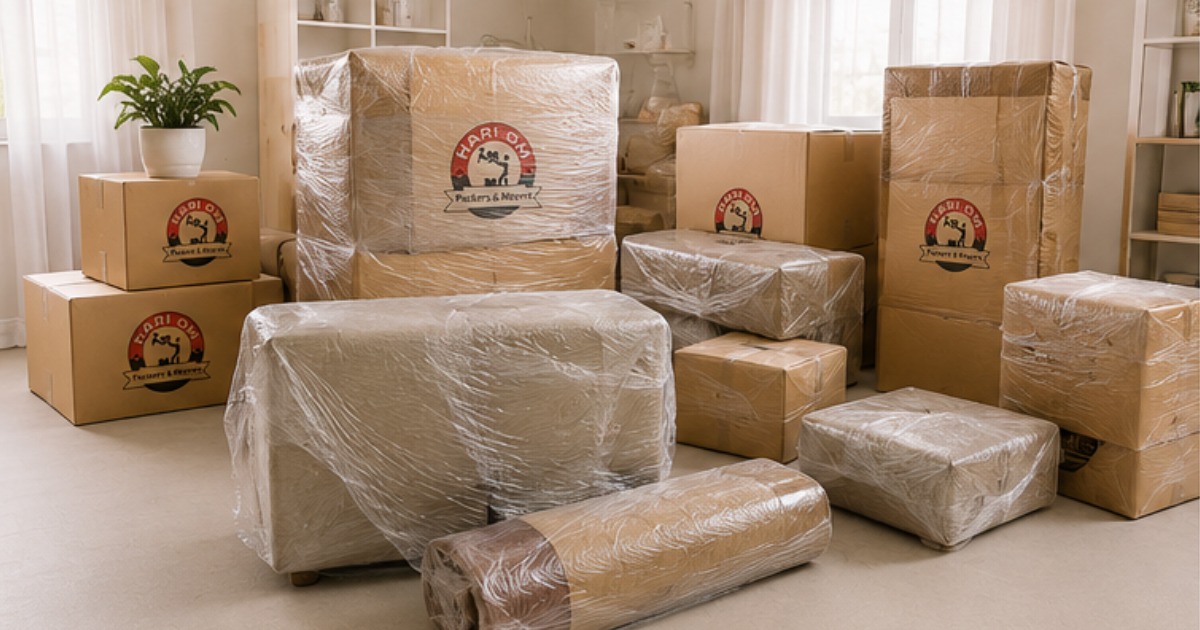
Improper packing is one of the common causes of damage during relocation. Professional packing helps provide:
Better protection against impact and vibration
Reduced risk of scratches and breakage
Secure positioning inside cartons
Protection of delicate surfaces and corners
Organized packing and labeling
Safer loading and transportation
Greater peace of mind during long-distance relocation
Our Professional Packing Approach
At Hari Om Packers & Movers, we focus on careful preparation before transportation. Our packing solutions can include foam sheets, bubble wrap, stretch and shrink film, heavy-duty moving boxes, edge protection, tapes, and straps, depending on the type and sensitivity of the item.
From household shifting to office relocation and long-distance moving, our team takes care of your belongings with attention to detail.
Safe Packing for a Safer Move
Whether you are relocating a complete household or transporting a few valuable belongings, proper wrapping can make a significant difference. Glassware needs cushioning, electronics need surface and impact protection, and antiques require customized handling.
With the right packing materials, professional techniques, and careful transportation, fragile and valuable belongings can be moved with greater confidence.
Choose Hari Om Packers & Movers
Looking for reliable packing and moving services in India?
Hari Om Packers & Movers provides professional packing and relocation solutions for households, offices, corporate moves, and valuable belongings.
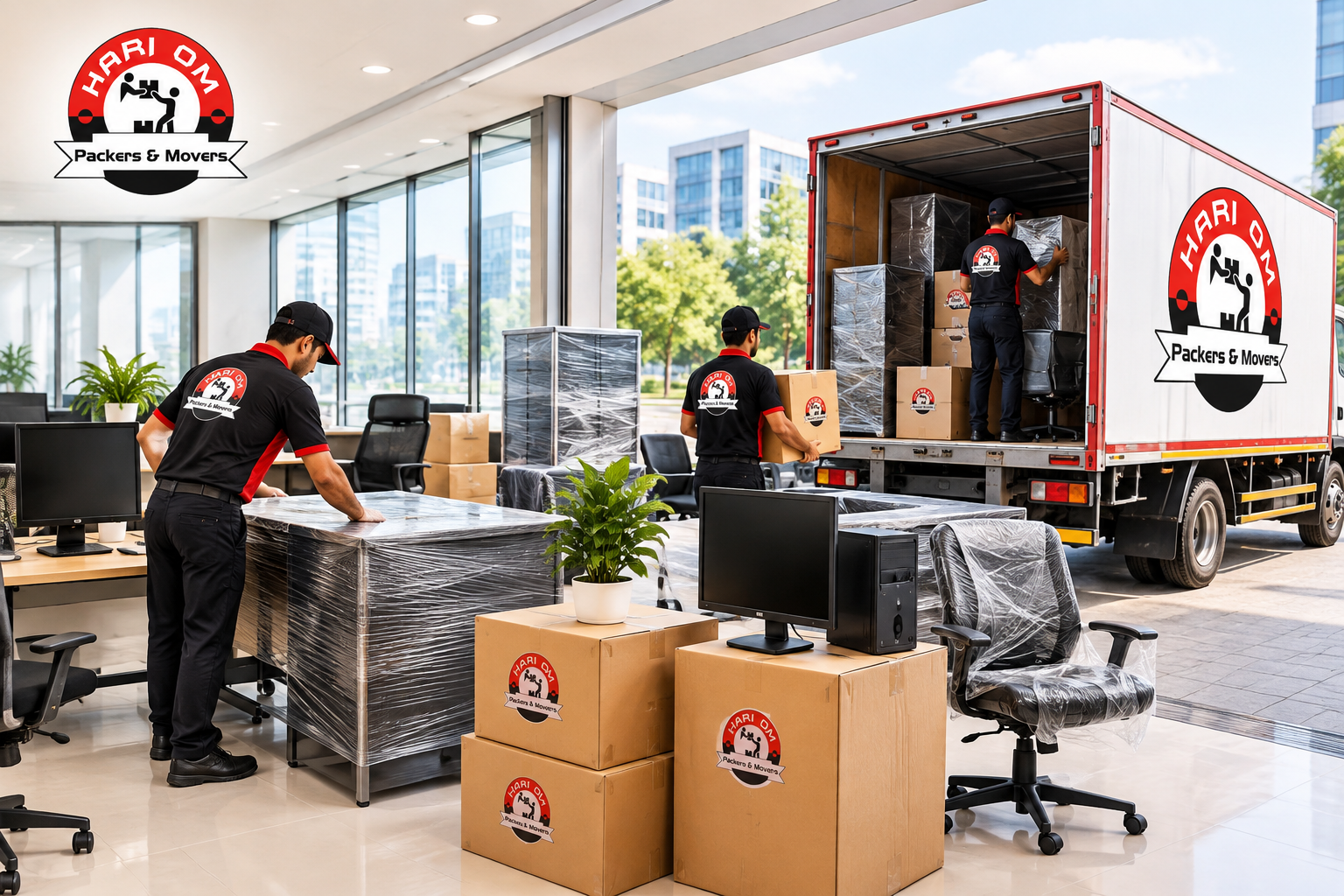
Office and Corporate Relocation Services
Corporate office shifting office relocation services commercial relocation corporate movers in India and Pan India office relocation

Trusted by Leading Brands for Reliable Moving and Logistics Solution
Discover the trusted brands associated with Hari Om Packers & Movers. Professional packing, corporate relocation, transportation, household shifting and Pan-India moving services

Step by Step Family Packing and Moving Guide by HOPM
Planning for a family move? Follow our step-by-step packing and moving guide with expert tips for a safe, organized, and stress-free relocation, moving services across India.